
Gold-tone stainless steel: what to know
Why our jewellery is made of 316L stainless steel with an 18K gold PVD coating, what that changes day to day, and how to keep it bright.
4 minute read
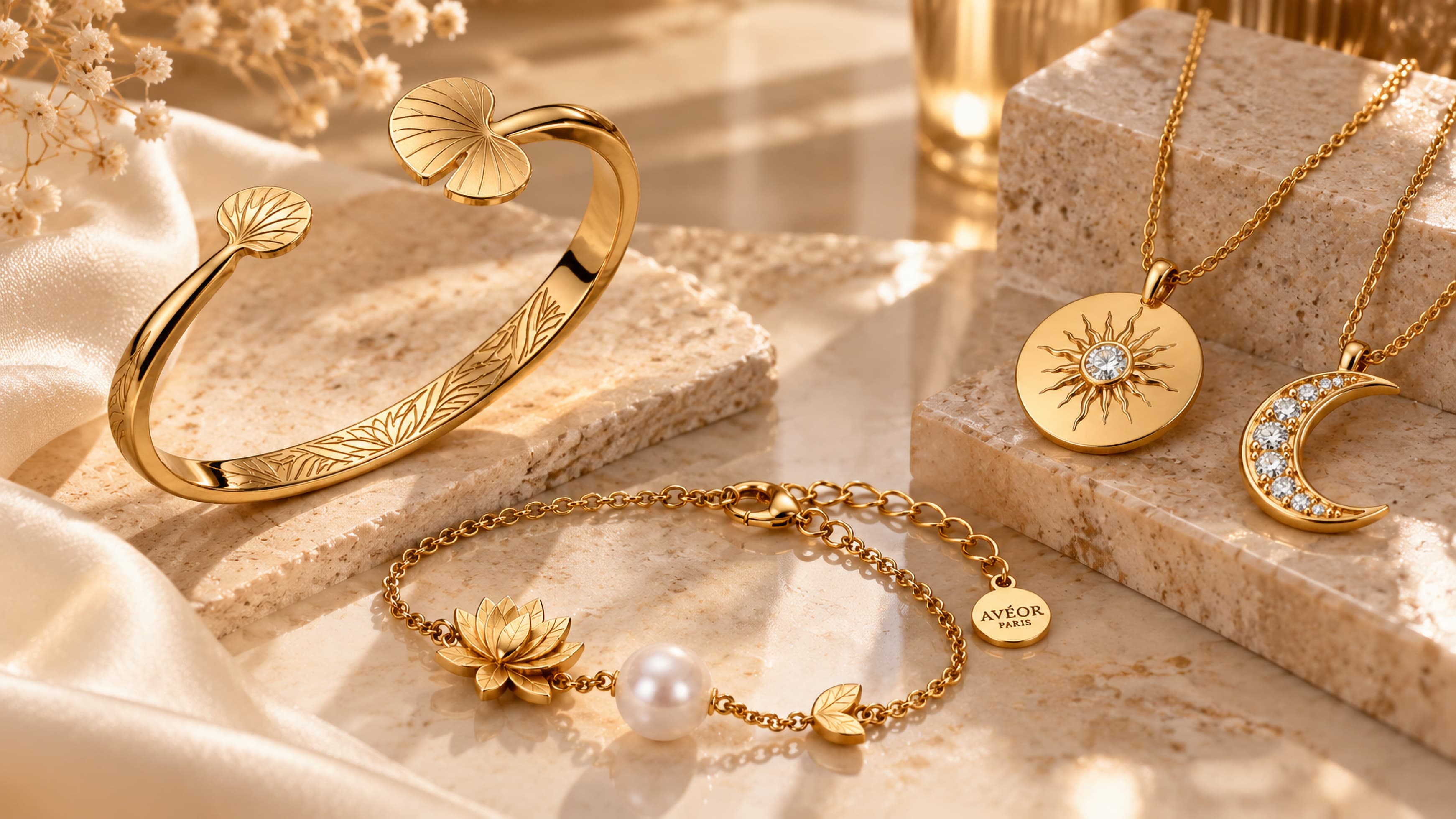
Gold-tone jewellery is often thought of in two families: solid gold, precious and costly, and costume jewellery, which tarnishes within weeks and sometimes leaves a mark on the skin. Gold-tone stainless steel sits between the two. It does not claim to be solid gold, but nor does it behave like costume jewellery. Here is what it is, and what it is not.
316L steel
316L is the grade of stainless steel used in jewellery and medical equipment. Its composition — iron, chromium, nickel and molybdenum — gives it very good resistance to corrosion: it does not rust, does not tarnish and leaves no green mark on the skin, as brass can. It is also stronger than soft metals: a fine steel chain survives a snag better, and a clasp bends less.
The PVD coating
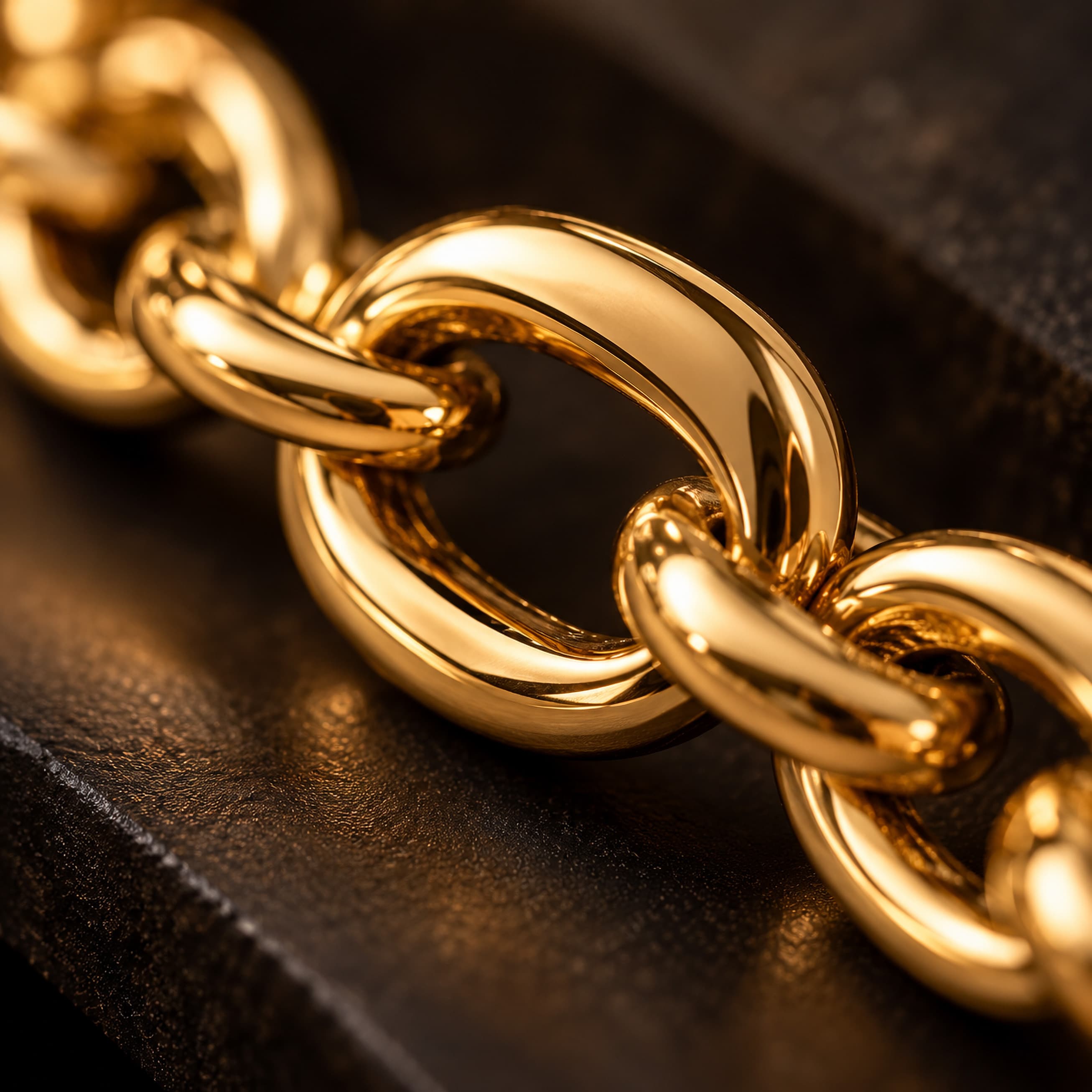
The gold colour comes from an 18K gold PVD coating. The process takes place in a vacuum: the coating material is vaporised, then settles on the piece in a very thin, very dense layer, bonded to the metal far more firmly than ordinary electroplated gilding. That is what keeps it from flaking at the first rub and lets it hold its colour over time. Nor is it indestructible: repeated friction, chlorine and salt eventually wear it.
What it changes day to day
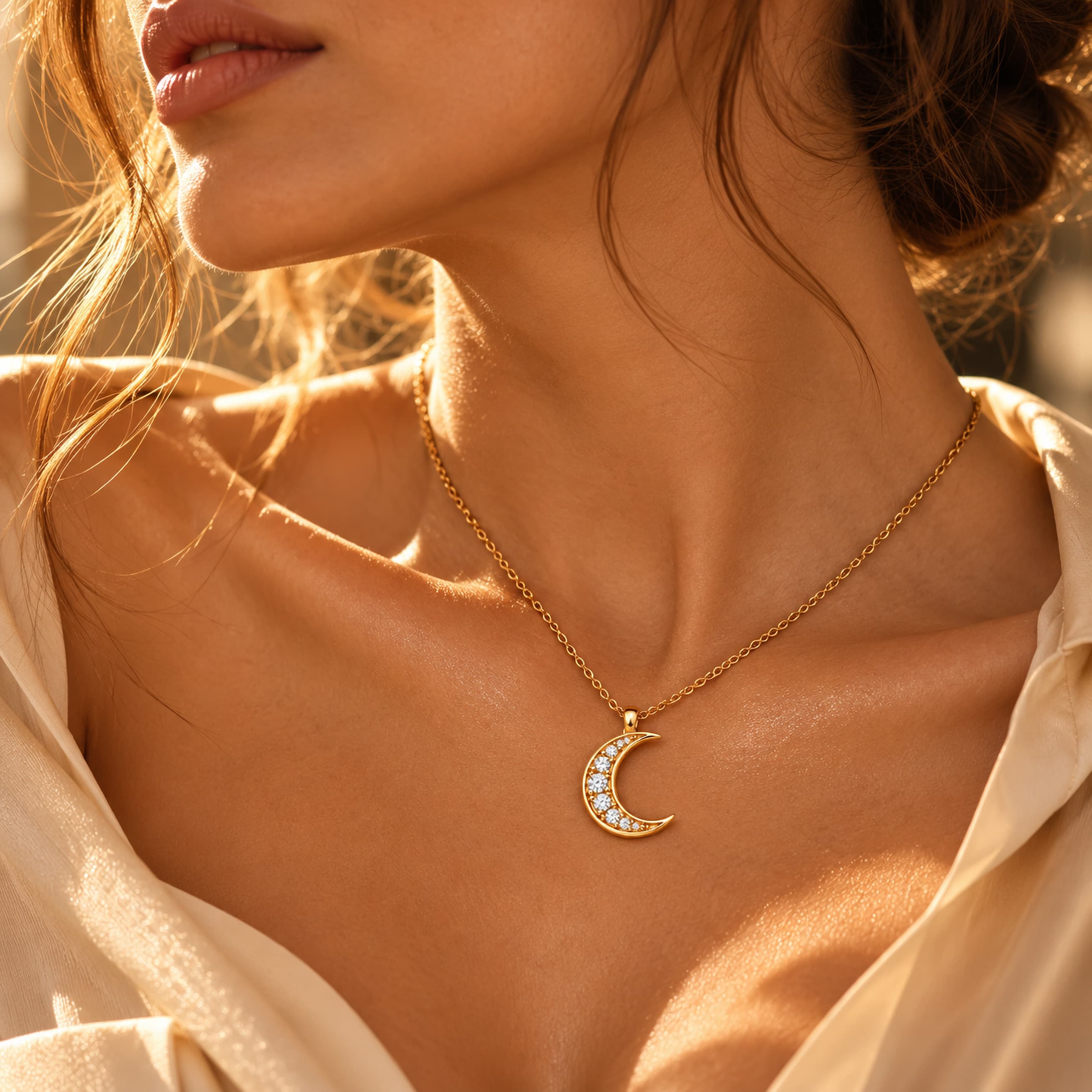
In practice, a piece of gold-tone steel jewellery can be worn every day without special precautions. Steel copes with perspiration and tap water: no need to take your jewellery off to wash your hands. It does not change colour against the skin and keeps its shine far longer than costume jewellery. That is what makes it an ideal material for the pieces you no longer want to take off.
Water, perfume, sport
A few moments still call for taking it off. At the pool, chlorine attacks the coating; at the sea, salt does. During sport, heavy perspiration and repeated friction wear it faster. And perfume, cream and hairspray go on before your jewellery: left on the metal, they eventually dull it.
Layering
Gold-tone steel lends itself particularly well to layering, because its pieces don't scratch each other easily. The rule is simple: lengths a few centimetres apart, so each chain finds its place without tangling, and a single strong piece — a pendant, a medallion — surrounded by finer chains. At the wrist, the same principle applies to bracelets, which look good next to a watch or a knotted silk square.
Mixing metals
For a long time, people didn't dare wear gold and silver together. The rule has relaxed: a gold-tone piece and a steel watch, for example, go very well together, especially if they echo elsewhere in the outfit. What matters is intention — two metals worn together should look chosen, not accidental.
What about nickel?
316L steel contains nickel, firmly bound into the metal. European regulations limit how much nickel a piece of jewellery may release on contact with the skin, and our jewellery is subject to them like all jewellery sold in Europe. If you know you are very sensitive to nickel, ask a dermatologist before wearing any piece of jewellery every day.
Storing and travelling
Store your chains separately, flat or hanging: two chains in the same pouch tangle and scratch. When travelling, each piece's gift box protects it from knocks and from rubbing against other objects. Pieces set with freshwater pearls are stored apart, flat, away from metal pieces that could scratch them.
Recognising a well-made piece
Beyond the material, a few details reveal the quality of a piece: a clasp that opens and closes cleanly, with no play; an even colour, with no lighter patch around the solder points; a regular chain whose links are all identical; a weight that feels reassuring in the hand. These are the points to look at before buying — with us as anywhere else.