

Our silk, our materials
Three materials, chosen to be worn and to last: mulberry silk, gold-tone stainless steel, freshwater pearls. What they are, and why we chose them.
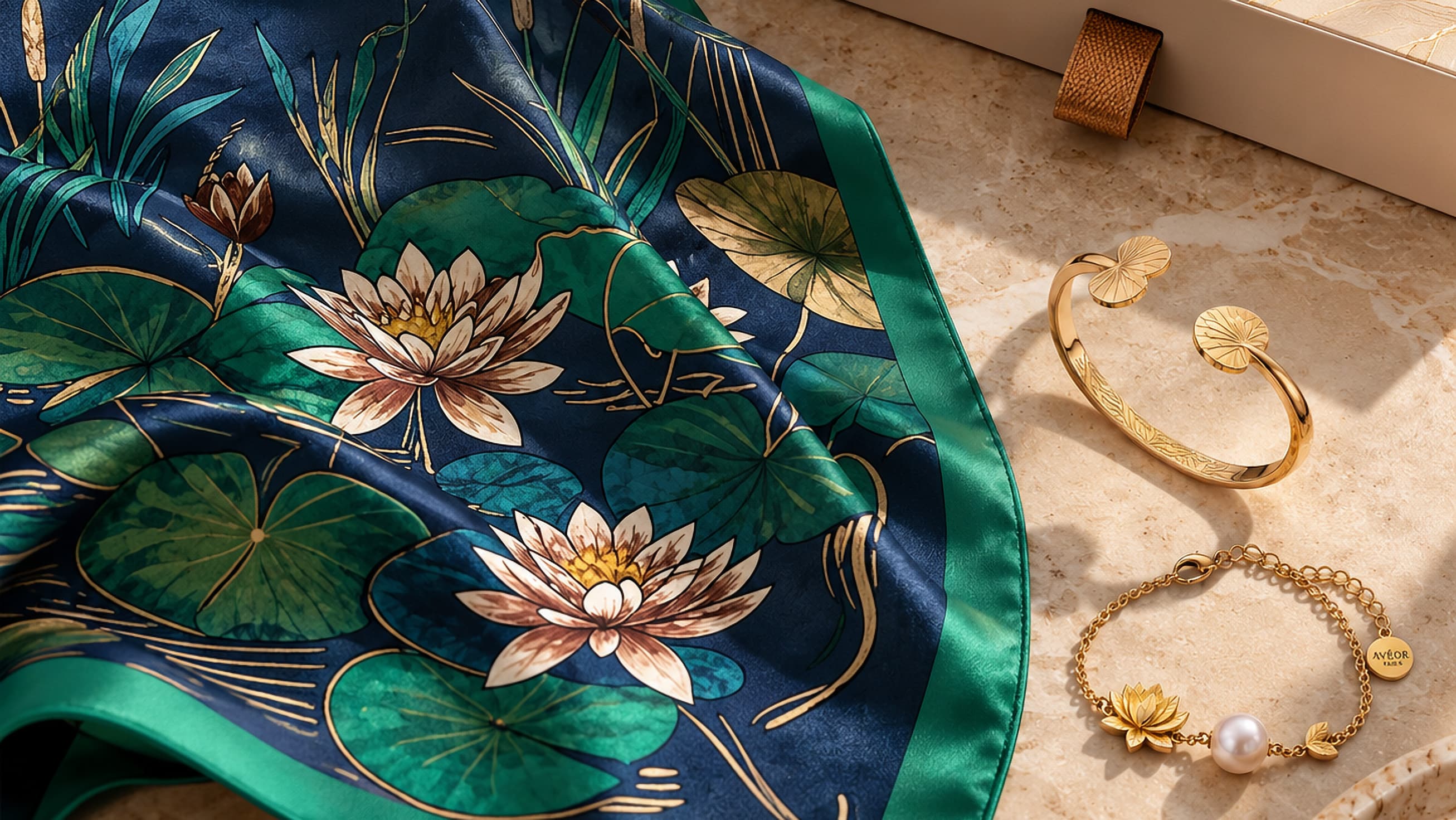
A material is judged by wearing it, not by reading about it. Even so, we have chosen to set everything out here, plainly: what our materials are, where their names come from, and what they change when you wear them. The same specifications appear on every product page, above the price.
Mulberry silk
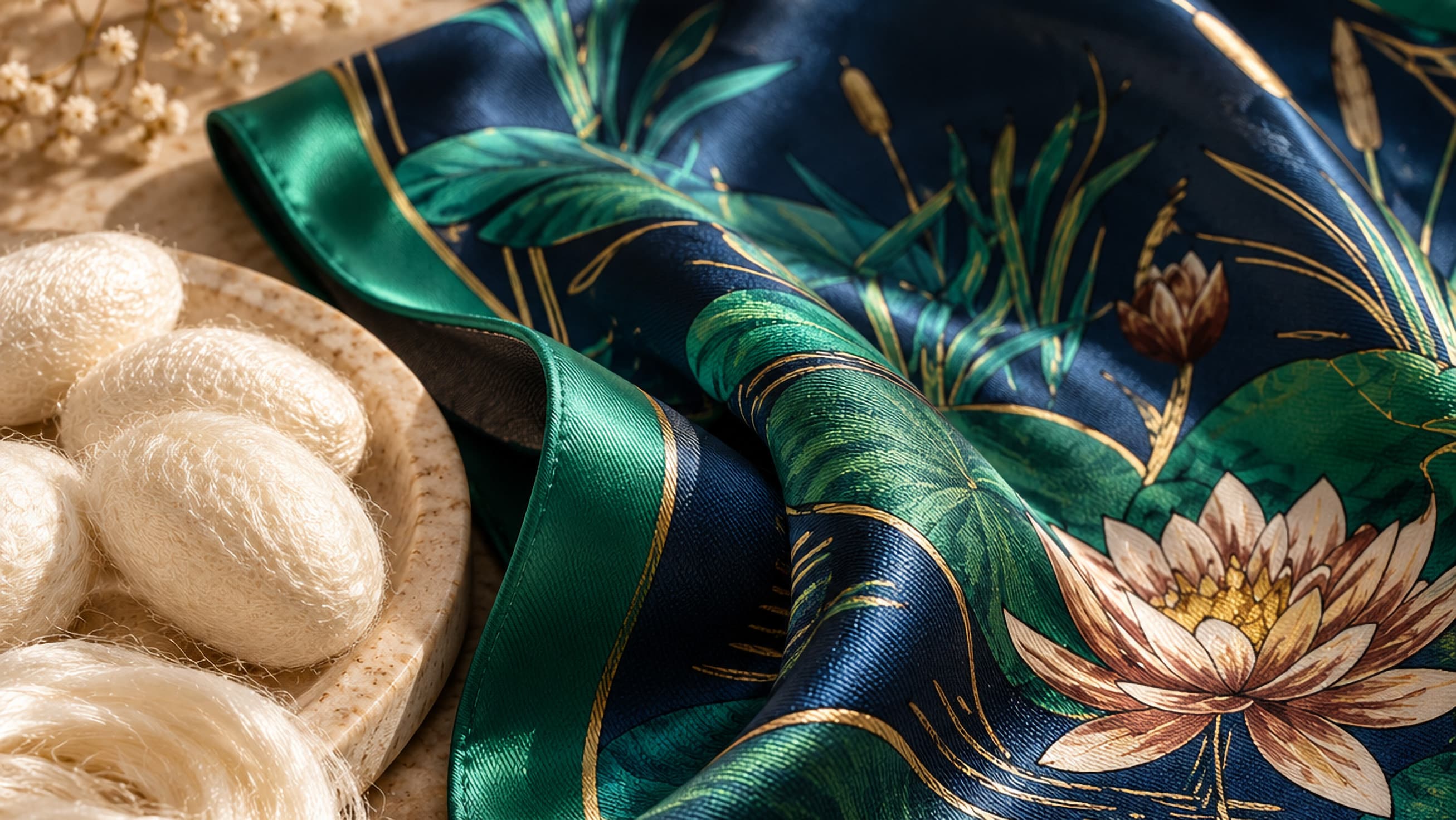
Our squares are made of one hundred per cent mulberry silk. It takes its name from the silkworm that produces it, the Bombyx, which is raised and fed exclusively on mulberry leaves. The result is a very long, even, smooth thread: that is what gives this silk its touch, its soft lustre and its body. It is the reference silk for quality squares.
It is woven as a twill: a diagonal weave, the one used for the great silk squares. Twill gives the fabric more body and density than a plain weave, a faintly ribbed surface that catches the light, and a depth of colour flat weaves cannot reach.
18 momme: the weight behind the drape
Silk is not weighed in grams but in momme, a unit that comes from Japan: one momme is roughly 4.3 grams per square metre. Our squares weigh 18 momme, close to 78 grams per square metre. That is the weight of a silk with body: dense enough to knot without slipping and fall softly, light enough to stay cool at the neck and disappear into a bag. A finer silk creases and turns sheer; a heavier one loses its movement.
Printed on both sides
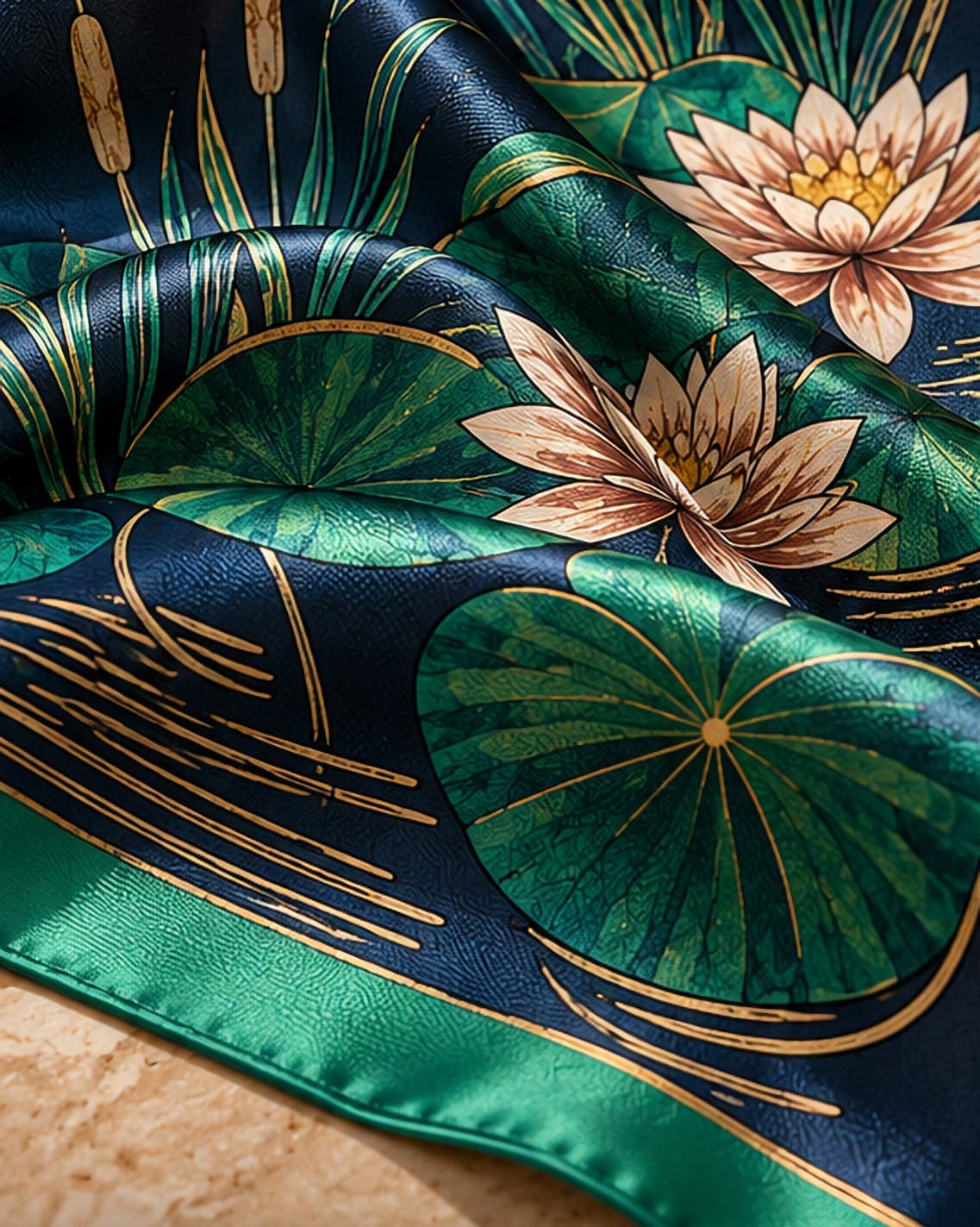
On most squares, the design is printed on one side only: the reverse is paler, sometimes almost white. Ours are printed on both sides. Knotted, folded, turned over, the square shows the same bold colours whichever side appears. That is what lets you wear it without worrying which way round it is — at the neck as in the hair, where both faces are often seen at once.
The hand-rolled hem
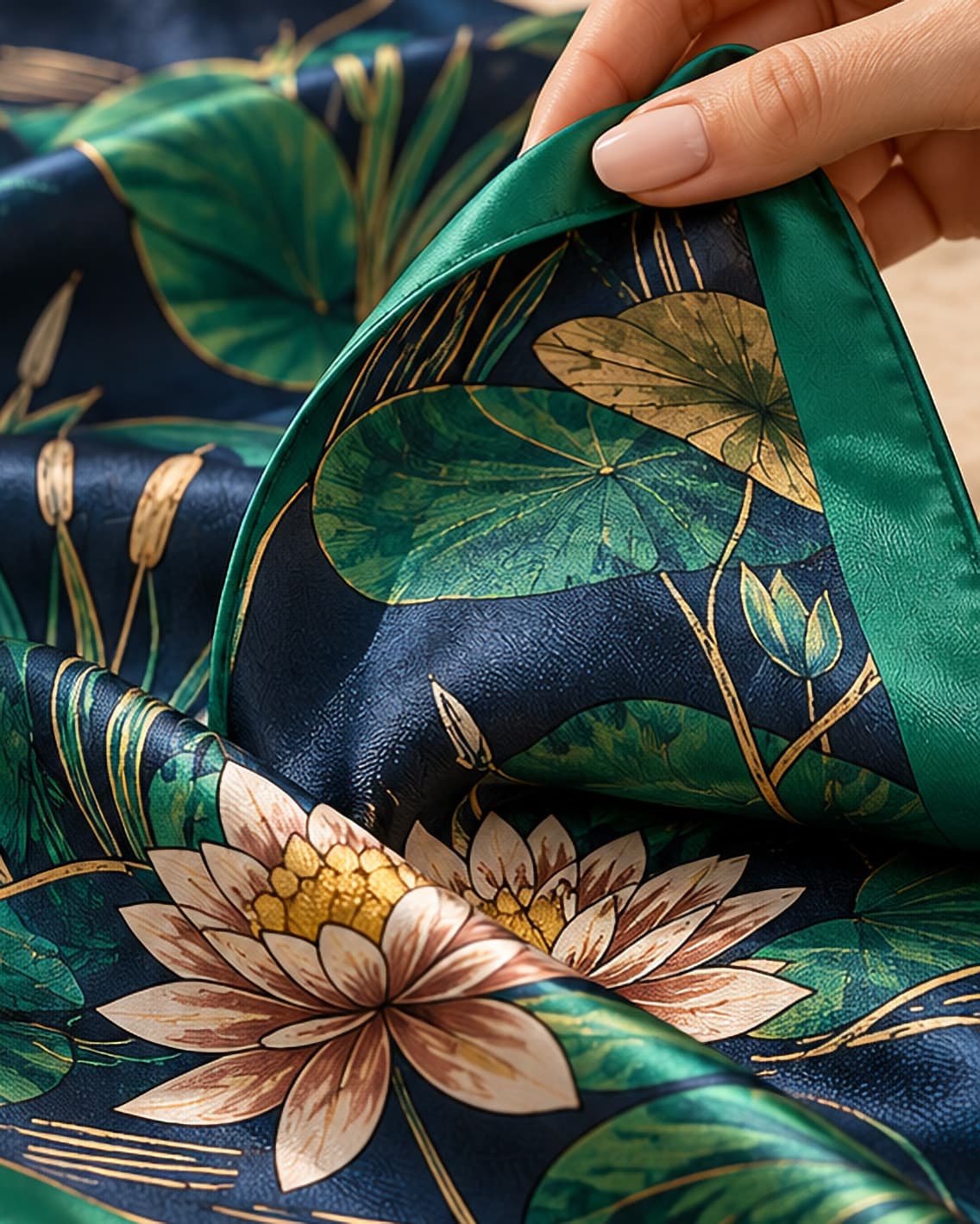
On a machine-finished scarf, the hem is stitched flat: the edge hangs straight, creases where it folds, ages badly. On our squares it is rolled between two fingers, then caught with a stitch you can barely see, side after side, all four of them. The result is a slight swell running right around the square, which gives it body and makes a scarf knot rather than hang. Nobody notices a rolled hem; people only notice that the knot holds better.
Gold-tone stainless steel
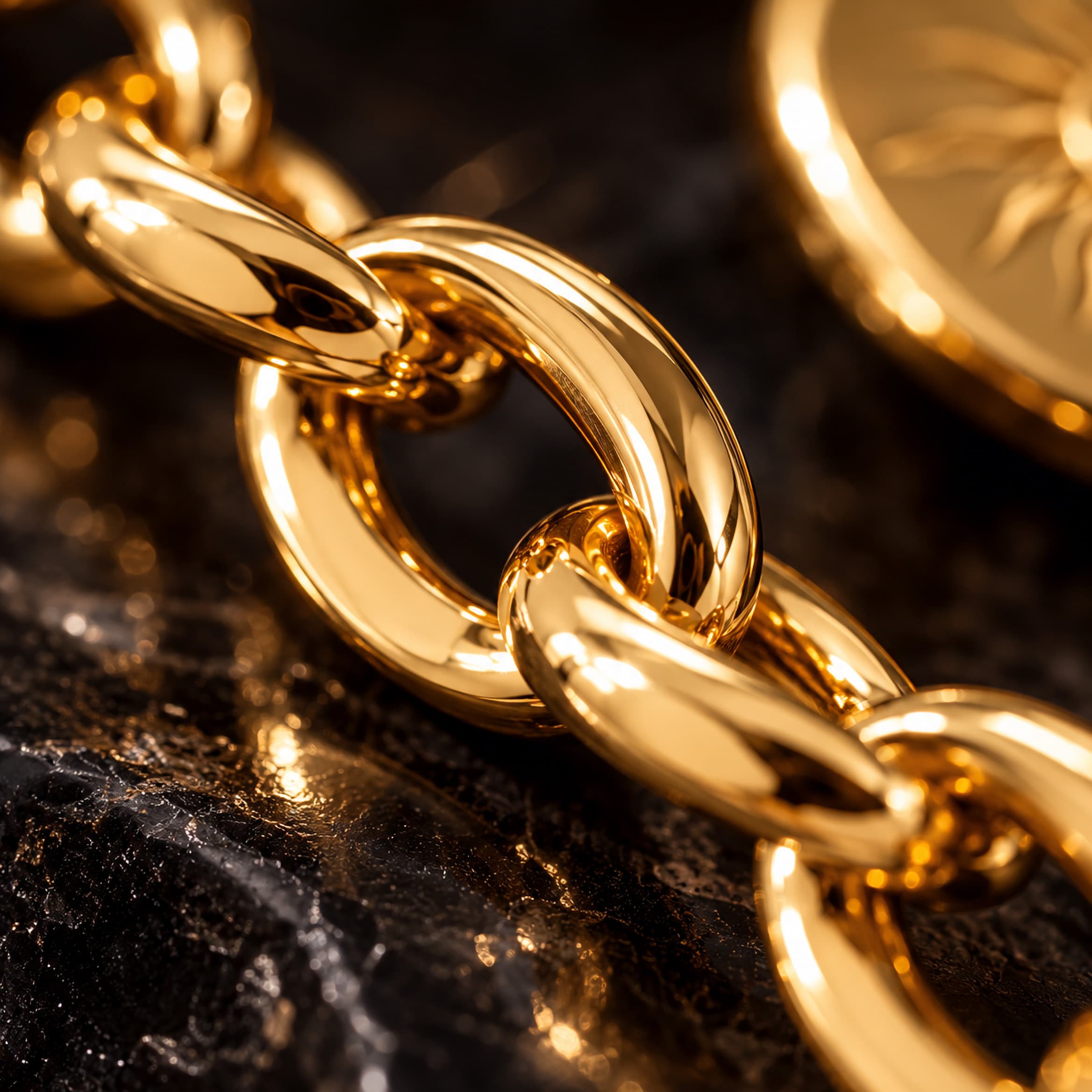
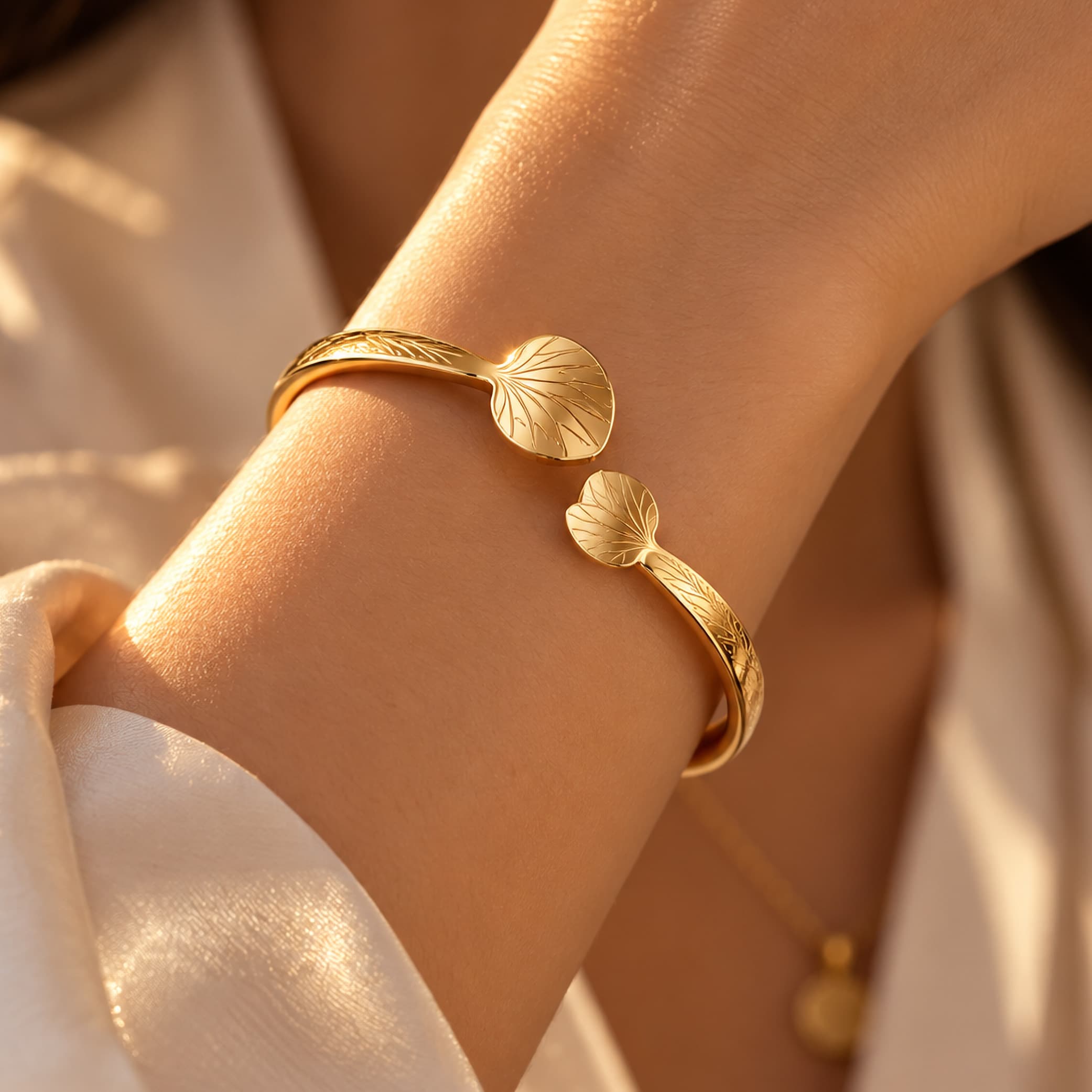
Our necklaces and bracelets are made of 316L stainless steel — the grade used in jewellery and medical equipment. It does not rust, does not tarnish, and leaves no green mark on the skin, as brass can. It is also stronger than soft metals: a fine chain survives a snag better, a clasp bends less.
The colour comes from an 18K gold PVD coating. The process takes place in a vacuum: the material is vaporised and settles on the piece in a thin, dense layer, bonded to the metal far more firmly than ordinary electroplated gilding. It does not flake at the first rub and keeps its colour over time. Nor is it indestructible: repeated friction, chlorine and salt eventually wear it.
Freshwater pearls
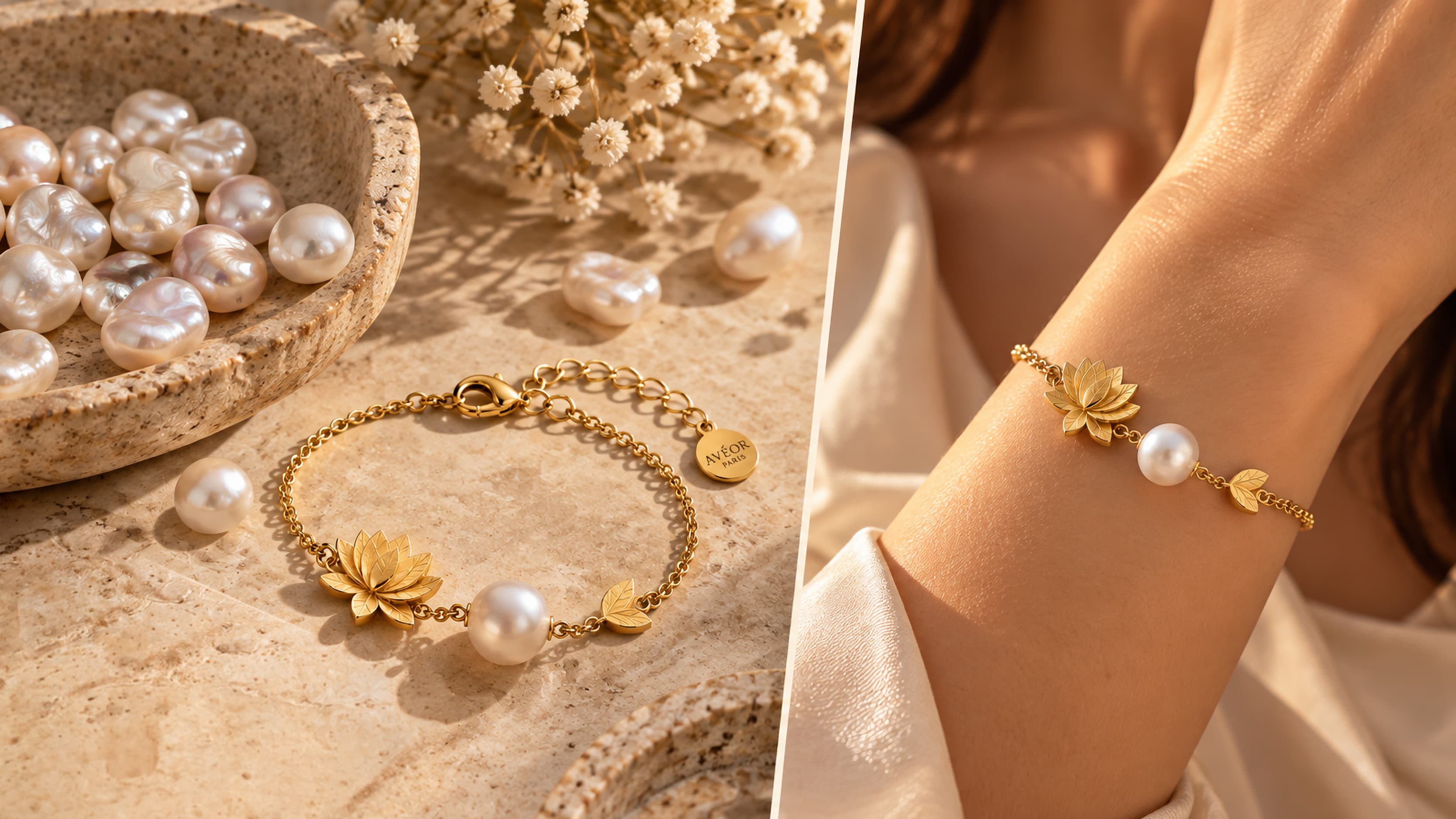
Some of our pieces carry cultured freshwater pearls. They form in lake or river mussels, around a fragment placed there by hand, which the shell patiently coats in nacre, layer after layer. That nacre is what gives them their light.
No two freshwater pearls are alike. Their shape, size and lustre vary slightly: a pearl that is a little oval, an overtone that leans pink, a surface that is not perfectly smooth. These are not flaws but the signature of a living material — and the reason the pearl you receive will never be exactly the one in the photograph.
What we write, and what we don't
Everything on this page comes from the specifications of our pieces, and you will find it on every product page. Conversely, you will never read “gold-plated” from us — a regulated term that does not match our process — nor “hypoallergenic”, an absolute promise no jewellery can keep. If a question goes unanswered, write to us: we would rather have one more question than one promise too many.