
Washing and pressing a silk scarf
Silk needs washing less often than you think, and copes with it better than you fear. A few gestures keep a square's colours and body for years.
4 minute read
Silk has a reputation for being fragile. Above all, it is demanding on a few precise points — heat, friction, harsh products — and remarkably tolerant of everything else. Treated well, it keeps its colours and its body for years. Here is how to go about it, from washing to storing.
Does it really need washing?
A scarf you wear almost never needs washing. Silk is a fibre that breathes and does not hold on to smells the way a synthetic fabric does: airing it overnight over the back of a chair is usually enough to freshen it. Washing becomes necessary after heavy use — a whole summer worn at the neck, for instance — or when a stain has set in.
Test the colours first
Before the first wash, check that the colours hold. Dampen a corner of the square with a little cold water, then press it against a white cloth. If the cloth stays white, you can wash the square by hand without worry. If it picks up any colour, even slightly, don't wash it: take it straight to a dry cleaner, who will know how to handle a piece whose colours may run.
By hand, in cold water
Prepare the water
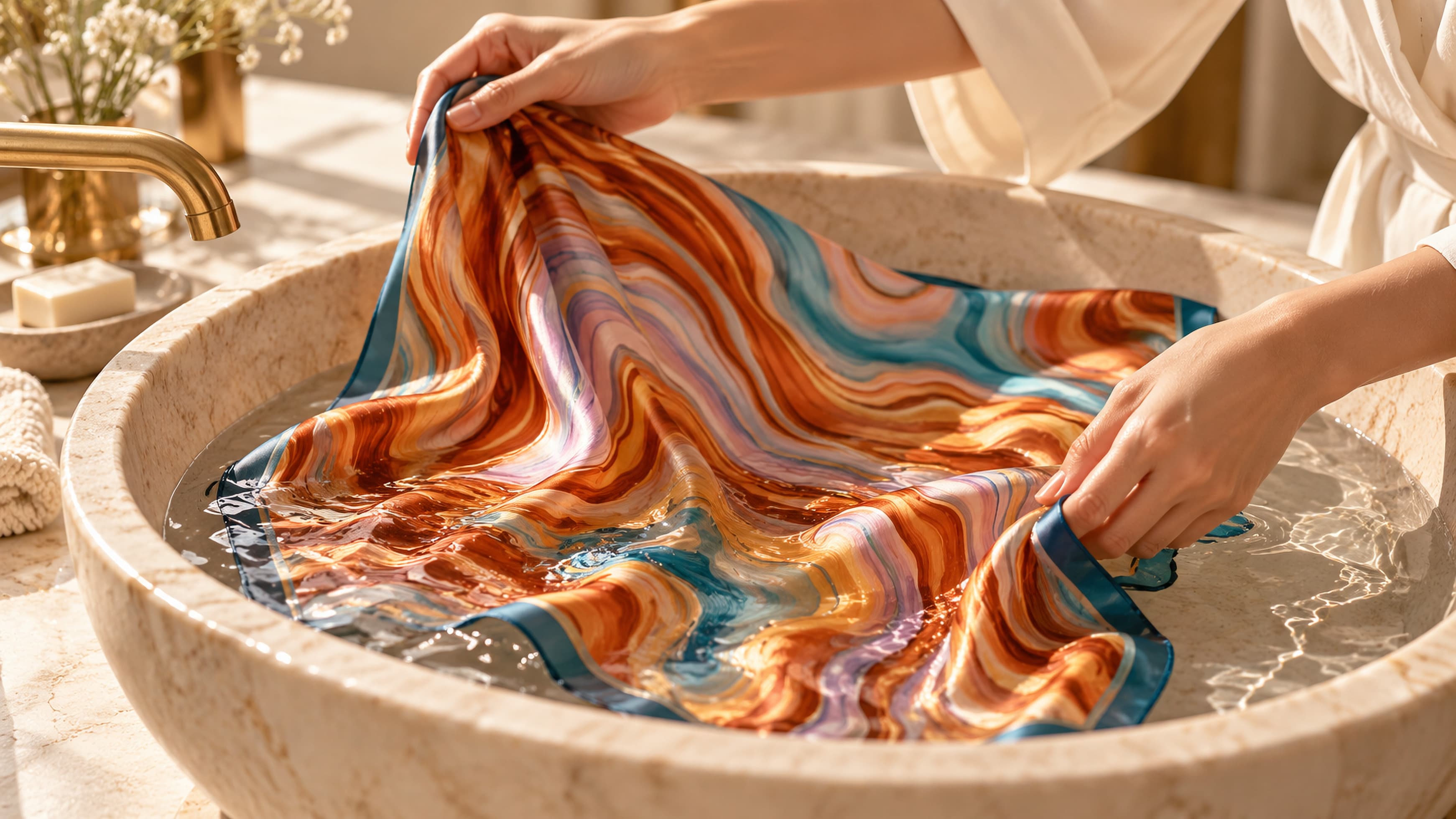
Fill a basin with cold or barely lukewarm water and add a drop of mild soap or silicone-free shampoo. Never an enzyme or whitening detergent: they attack the silk fibre, which is a protein.
Wash without rubbing
Dip the square and press it gently between your hands, without rubbing or wringing. Do not leave it to soak for more than five minutes: prolonged soaking dulls the colours and tires the fibre.
Rinse
Rinse thoroughly in cold water until the water runs clear. A spoonful of white vinegar in the last rinse revives the colours and clears any soap; the smell disappears as it dries.
Dry flat
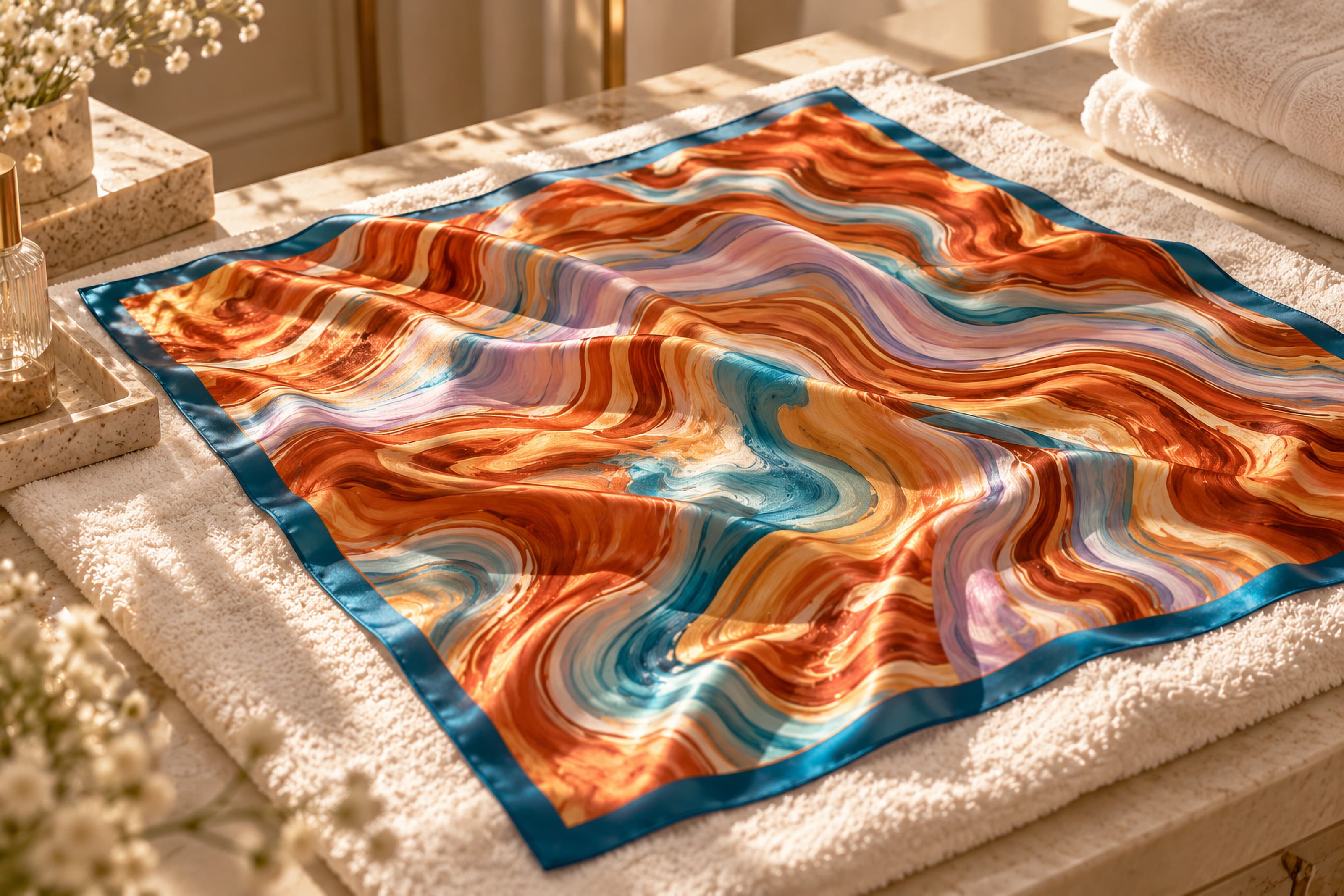
Don't wring the square to drain it. Roll it in a towel and press gently to absorb the water, then leave it to dry flat, in the shade, away from any heat source. Direct sun fades silk within hours.
Pressing
Press the scarf while still slightly damp, at a low temperature — silk setting, no steam — protected by a fine cloth, cotton or muslin. Our squares are printed on both sides: there is no reverse to favour, and it is the cloth that shields the colours from direct contact with the iron. Move gently, without pressing down, following the straight grain of the fabric rather than the diagonal. A hot iron on fully dry silk makes it shine, and the mark never comes out. If the square has already dried, mist it lightly before pressing.
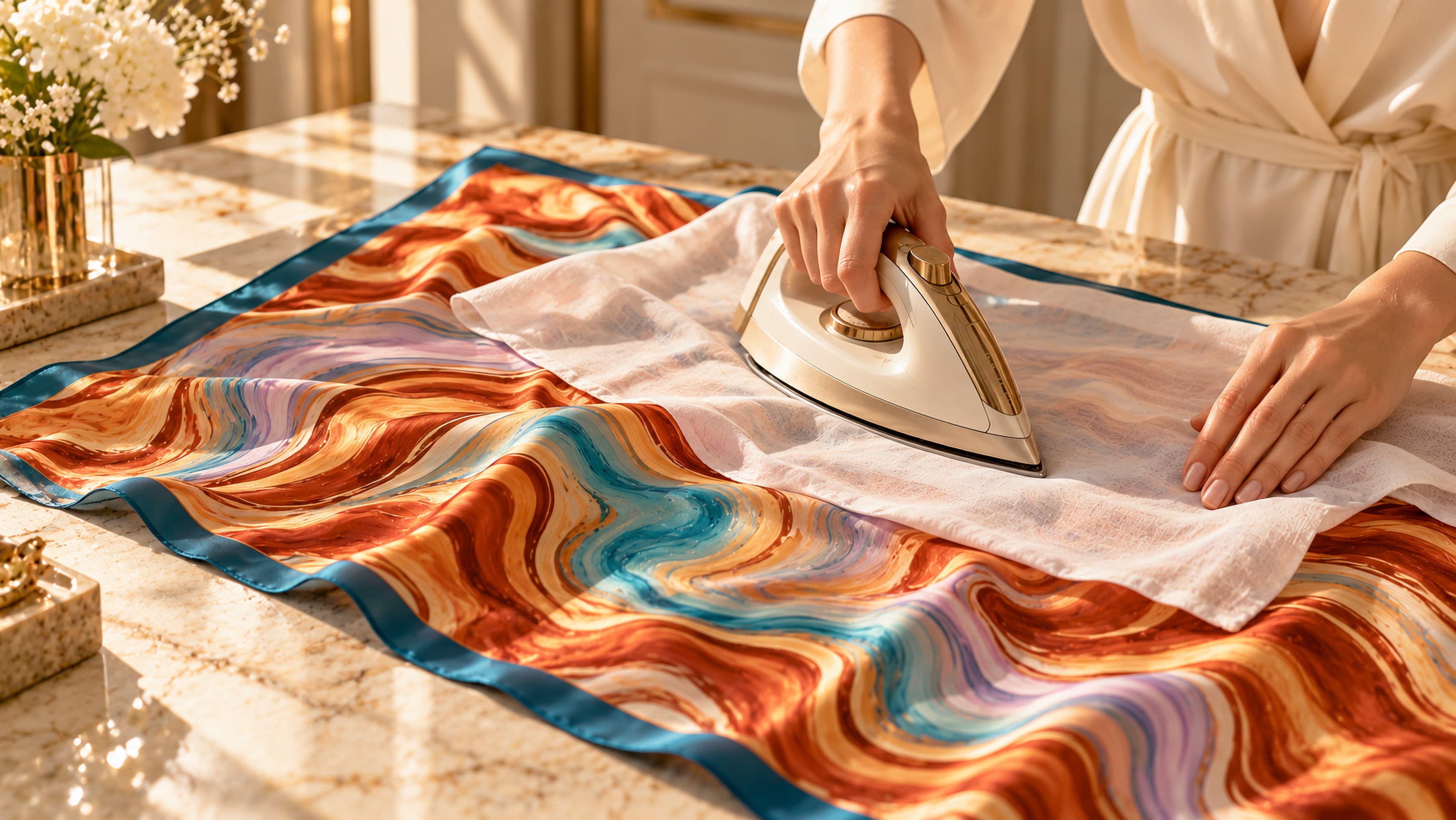
A hand-rolled hem needs particular care: don't flatten it under the iron. Its relief, rolled and stitched by hand, is what gives the square its body — iron up to it, never over it.
Reviving a tired square
A square that has been tied a lot can lose a little of its body without being dirty. There is no need to wash it then: mist it lightly, then press it at a low temperature under a fine cloth, as after a wash. Set creases disappear, the silk regains its drape, and the square is ready to be tied again.
If you spill something
Act quickly, and gently. Dab the stain with a clean cloth and a little cold water, without rubbing: rubbing damages the fibre and spreads the stain. Avoid shop-bought stain removers, often too harsh for silk. For a greasy, make-up or perfume stain, or whenever you are unsure, it is better not to try anything and to hand the square to a professional.
Storing
Store your squares rolled rather than folded: no crease sets in. Keep the gift box, which shields them from light, dust and rubbing, and avoid the bathroom, whose constant damp does not suit silk.
What to avoid
The washing machine and tumble dryer, even on a delicate cycle. Bleach and stain removers. Drying on a radiator or with a hairdryer. And perfume sprayed onto the scarf: apply it before tying the square, never after — alcohol marks the fibre and dulls the colours for good.