
The scarf in your hair
Bun, ponytail, headband or turban: a silk square holds a hairstyle better than a slide, and protects it better than an elastic.
4 minute read
Some gestures change a hairstyle in seconds. A scarf tied in the hair is one of them: it turns an ordinary ponytail into a look, rescues a bun made in a hurry, and gives loose hair a line no slide can. It also has the advantage of lasting through the day without being forgotten.
Why silk
Silk has a quality hair appreciates: it is smooth, and does not snag. Where an elastic squeezes, rubs and eventually breaks the lengths, a silk square holds without damage. That is why a scarf in the hair is not only a style gesture — it is also a gentle way to keep a hairstyle in place all day.
The low bun
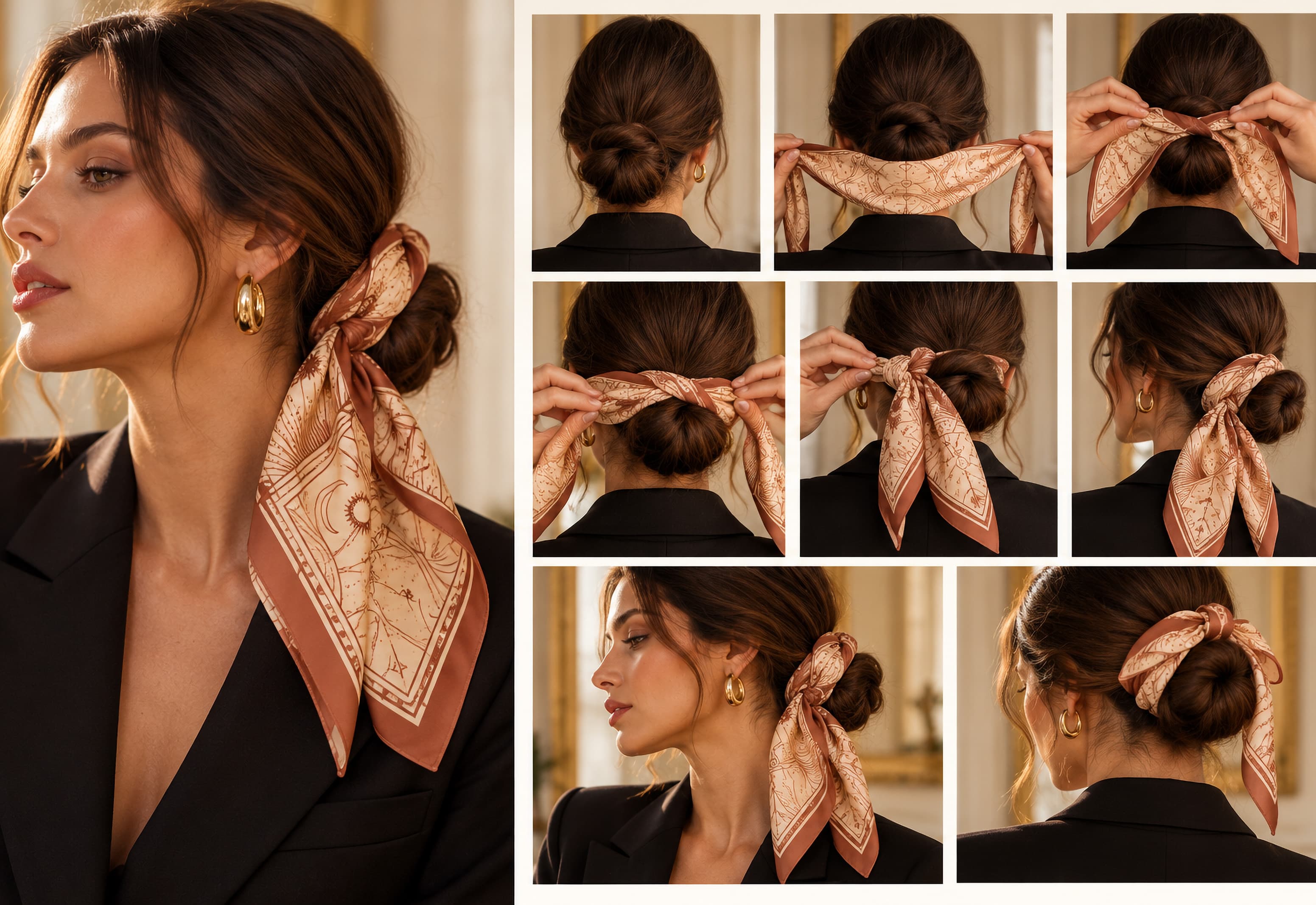
Make a low bun, held with a few pins. Fold the square into a medium band, pass it under the bun, cross it over the top and tie it, letting the ends fall. The knot sits to one side for a relaxed look, or just above the bun for a more structured one. With a dark jacket and gold-tone earrings, it is the most elegant hairstyle you can do in two minutes.
The tied ponytail
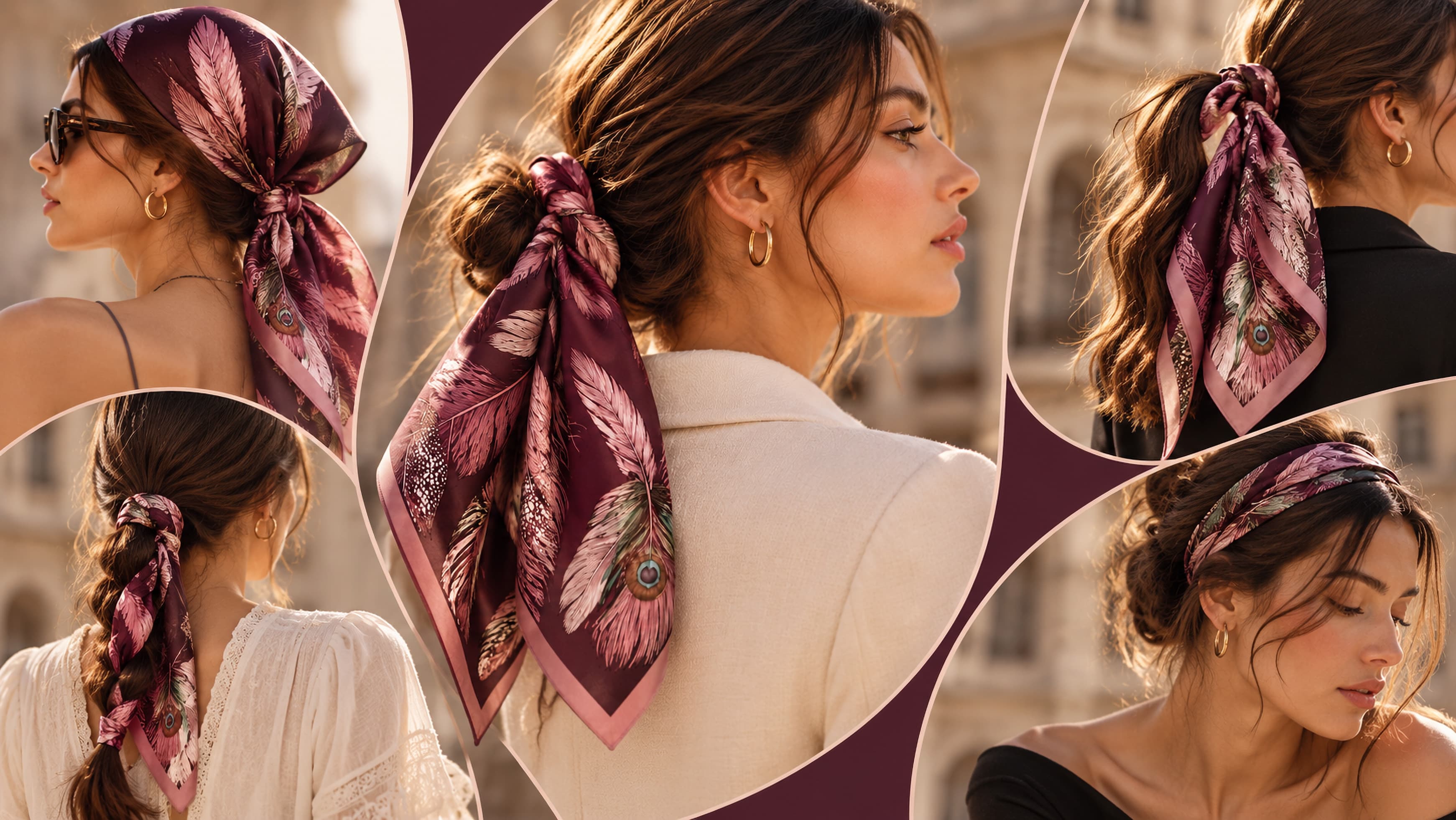
Fasten the ponytail with a thin elastic, then tie the silk band over it in a double knot, so as to hide the elastic. The longer the ends, the more they follow the movement of your hair. Worn high, it looks lively; low, at the nape, it suits office wear.
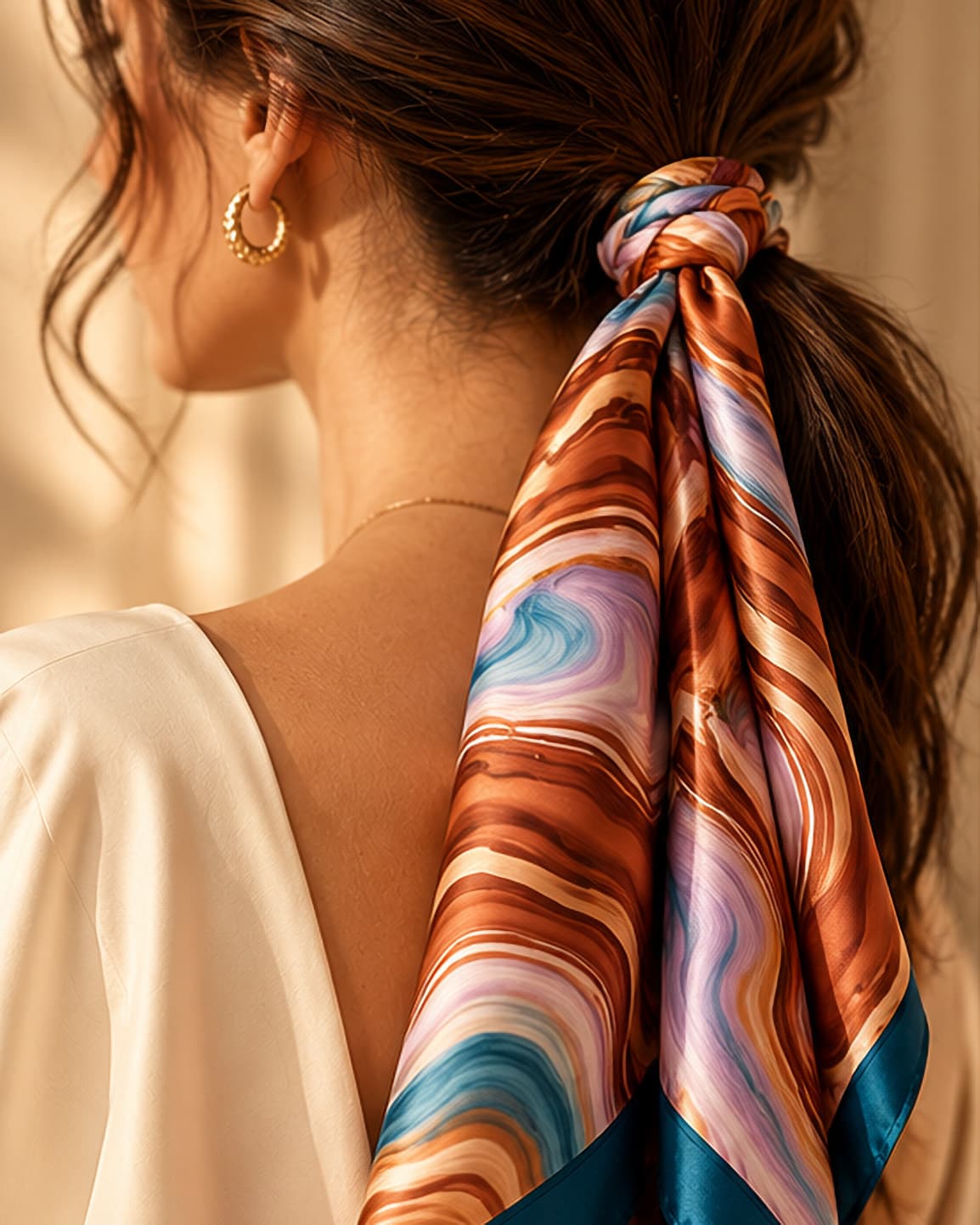
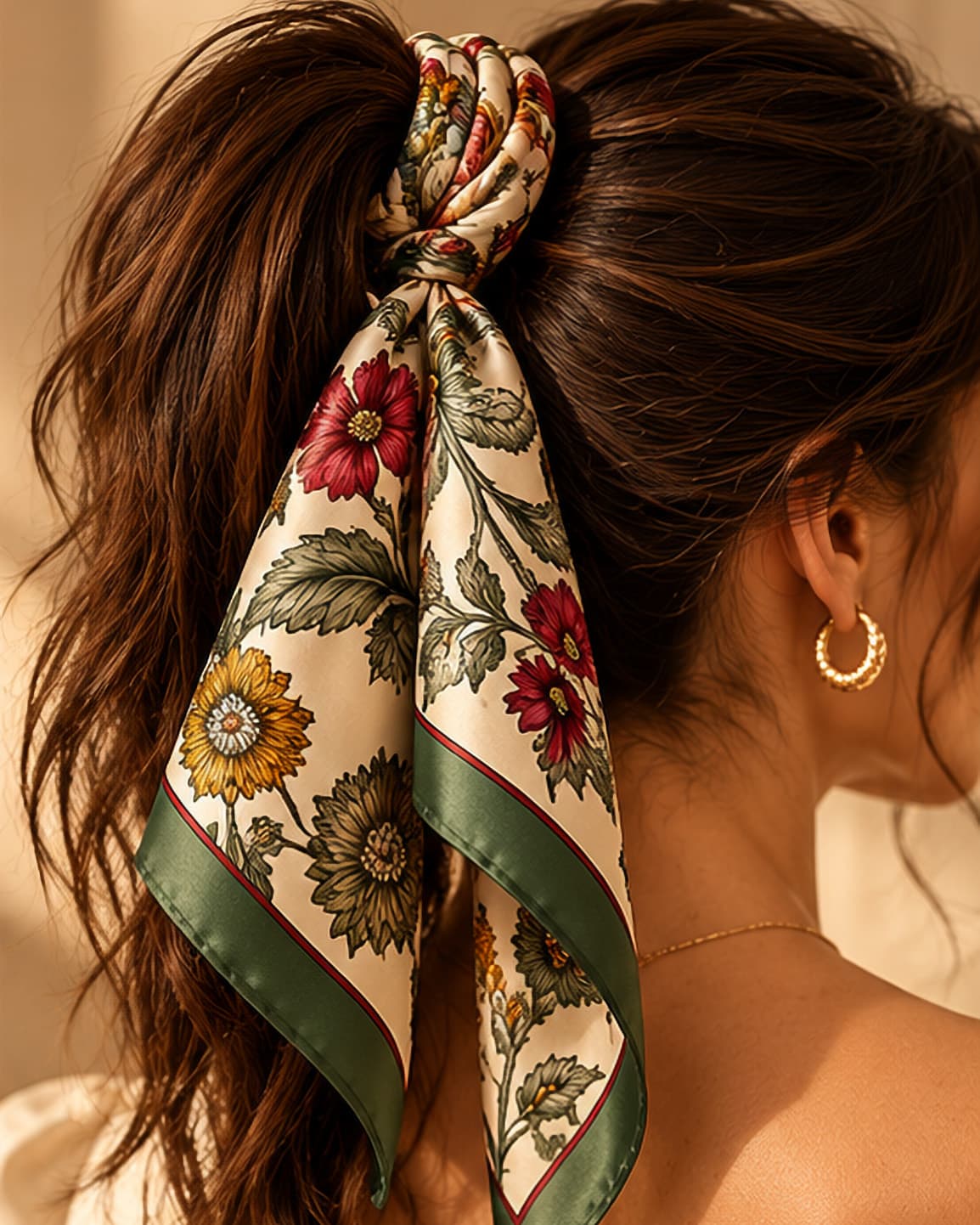
The half-up
Gather the top half of your hair at the back of the head, fasten it, then tie the square as a ribbon around the fastening. The rest of the hair stays loose. It is the gentlest version of the scarf in the hair, ideal for mid-length hair you don't want to tie up entirely.
Braided into a plait
This is the most graphic gesture. Fold the square into a very thin ribbon and tie one end at the base of the plait, under the elastic. Then plait, treating the ribbon as an extra strand, down to the tip, and tie it around the final elastic, leaving a small end showing. The colours of the print appear and disappear along the braid, and the plait holds better all day.
The headband and the turban
For a headband, fold the square into a thin band, lay it over the top of your head and tie it under the hair at the nape. For a turban, fold it into a triangle, lay the base on the nape, bring both corners up to the forehead, tie them and tuck the ends under the fabric. The turban holds on its own, entirely covers a hairstyle that hasn't had time to be done, and goes as well with a summer dress as with a winter coat.
Depending on the length of your hair
On short hair, the headband and the turban are the easiest: they need no length to hold. On mid-length hair, the half-up and the low bun work particularly well. On long hair, anything goes, and the tied ponytail shows off the lengths — the ends of the square mingle with the hair.
Choosing a print for the hair
Tied in the hair, a square shows only part of its design: an end, a corner, a knot. Tight motifs or bold contrasts do well there, because they stay readable even when folded. On dark hair, a light or golden ground stands out; on fair hair, a dark ground draws the hairstyle more clearly. And for a more discreet effect, a square in the tones of the hair almost disappears, leaving only the movement of the ends.
When travelling
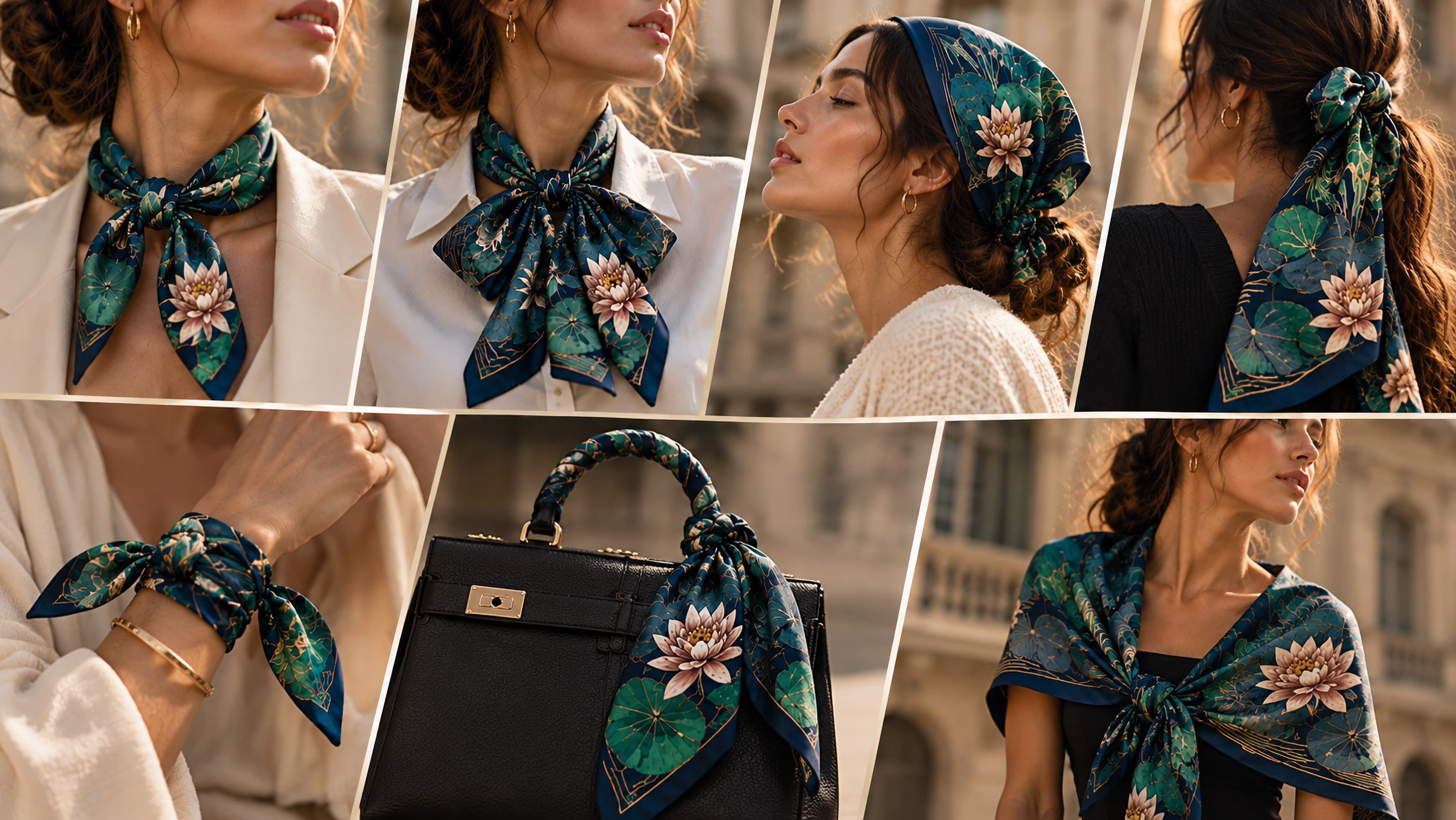
The silk square is also the ultimate travel accessory: it weighs nothing, barely creases once rolled, and replaces several accessories on its own. In the hair in the morning, at the neck against the air conditioning in the afternoon, on the bag in the evening: one square is enough for a week.
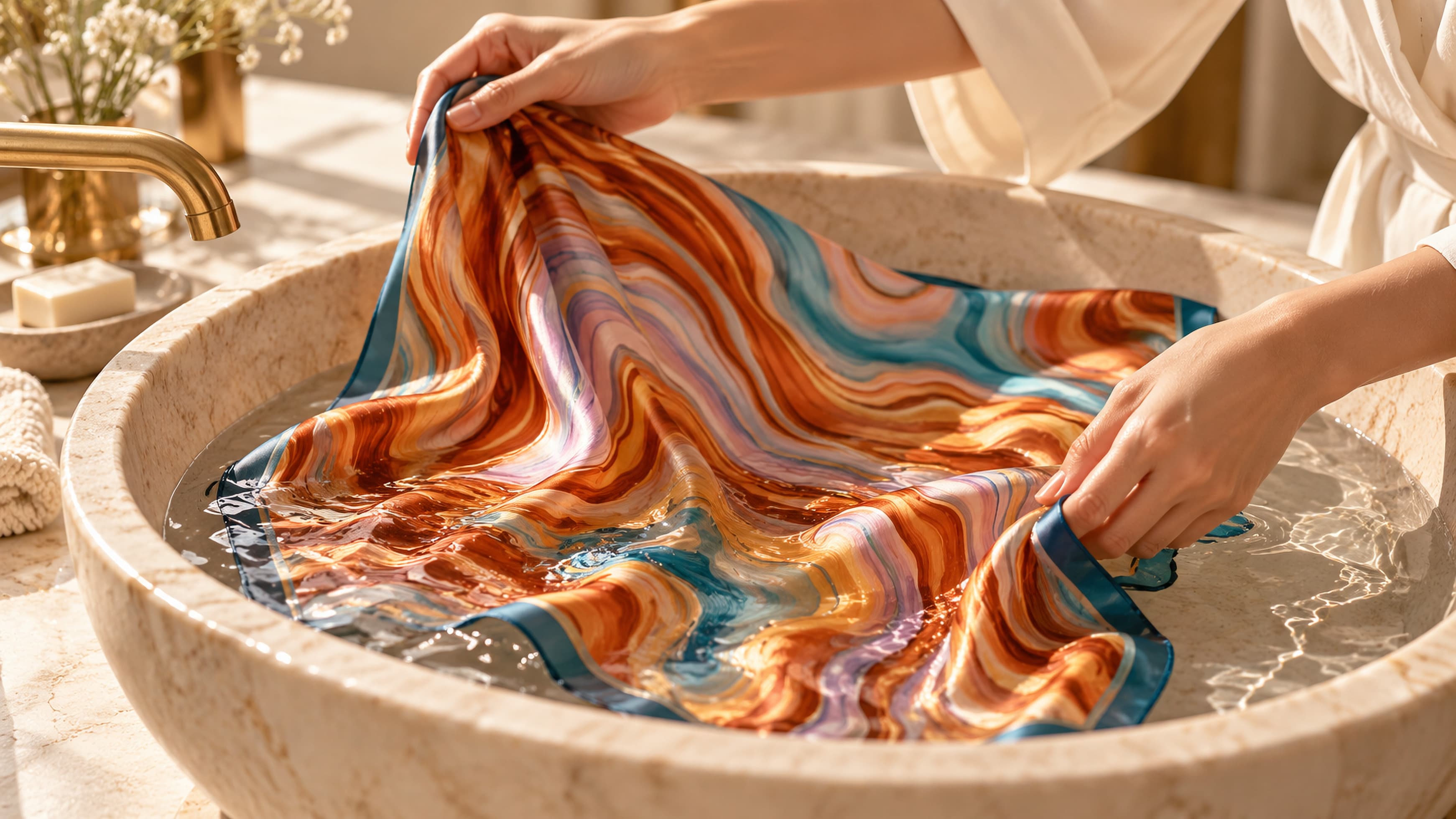
In the evening, untie the square and lay it flat: it regains its suppleness for the next day, ready to move from the hair to the neck or the wrist.